
Bikes



The bike on the left (Nigel) is a Nigel Dean World Tour. This was a late 1980s British tourer, one of the last of its type. It featured a Reynolds 531 Super Tourer steel frame , thumb shifters and a 3 x 7 Suntour drivetrain and weighed in at a whopping 29lbs.
The red bike (Odin) is a 2018 base model Specialized Allez with an alloy frame and a relatively slim 22lbs, Shimano Claris groupset and decent rim brakes.
Finally on the right (Baldur) we have a 2024 Canyon Endurace with a full Shimano 105 groupset, relaxed geometry, carbon seat tube, disc brakes and DT Swiss wheels. Still regarded as an entry level road bike but a world away from old Nigel.
The value of Good (and bad) decisions
May 2018 – A very overweight professor at a “Liberal Arts” college goes to his basement and resurrects his old Bicycle. So far so good…
Several months and numerous upgrades later and both the professor and the bike are in much better condition. The quest for improved performance continues, did I mention I was a bit obsessive? The mechanical connection between rider and bike is identified as the weakest link.
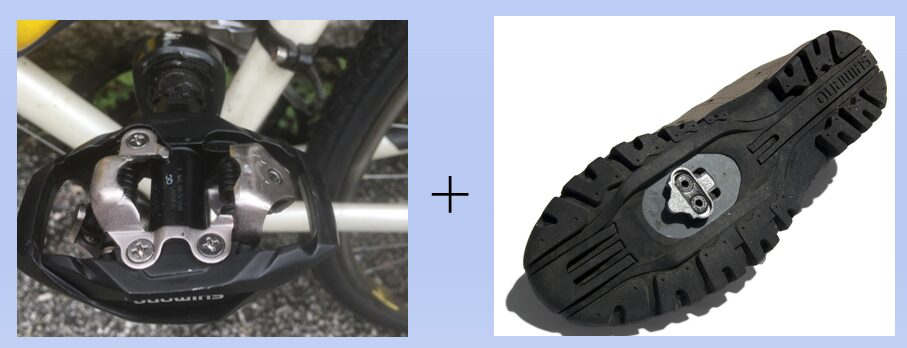
New clipless spd pedals are acquired, after all it is what the pros use so why not. Shortly after a new better (lighter and faster) bike is acquired and similarly fitted out.
Then on a circuit of Haverford college the professor takes a corner too fast and the bike slides away from him. Sadly, not quite all of him as his left foot is still clipped in…snap!
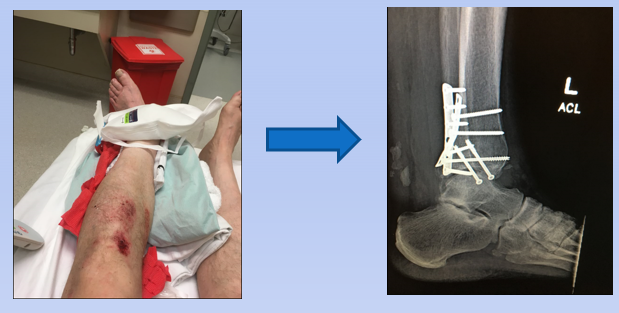
After suitable recuperation and extensive physiotherapy the pedals are replaced with flat mountain bike pedals and suitable shoes are purchased

So which was the bad decision?
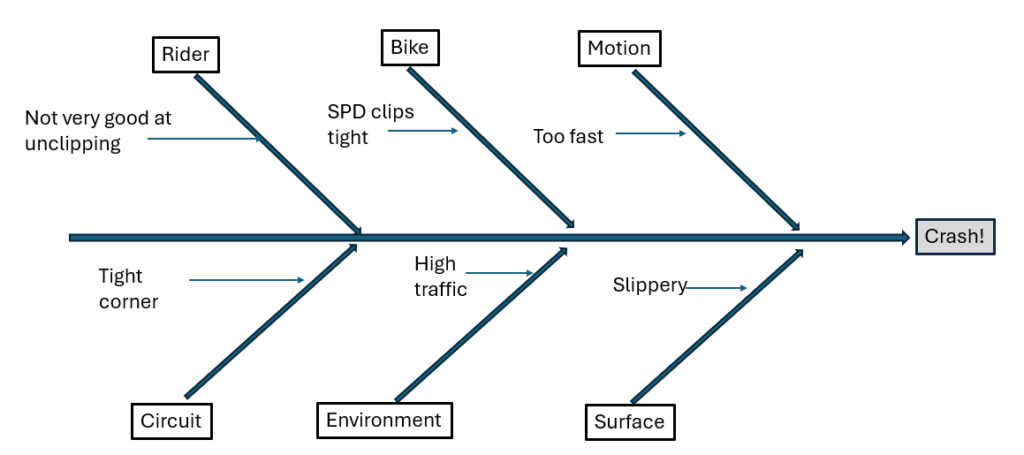
Well, the proximal bad decision was going too fast round a bend and not unclipping in time. The precursor to this calamity however was persisting in using clipless pedals even when I was aware that I really was not terribly good at unclipping.
Shall we do a Fishbone analysis?
Classic Horror Movies
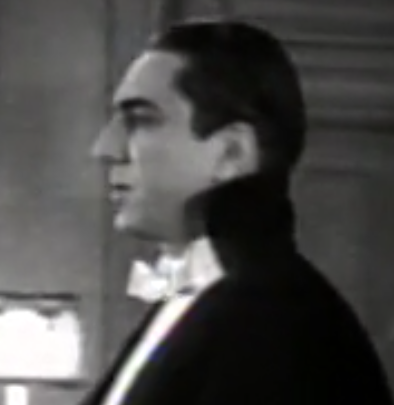

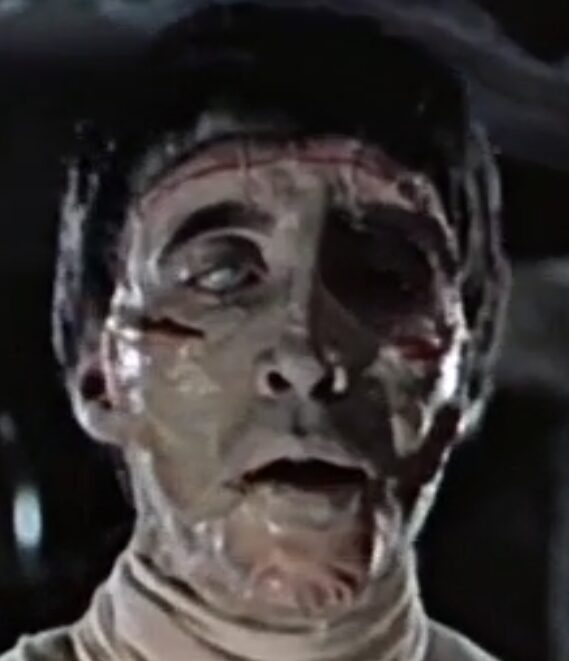
We love to be scared. Horror Movies engage with some of our deepest darkest elements of self. These can be creepy, gory, suspenseful, chilling, hammy or just downright unpleasant.
A Key player in this arena was Universal Studios with their movies featuring Dracula, Frankenstein, the Mummy and the Wolfman in the 1930s.
In the 1950s to 1970s the horror mantle was taken up by Hammer studios who brought glorious color to old favorites and many sleepless nights for the censors. Good examples include :
- Dracula (Tod Browning, 1931, USA)
- Frankenstein (James Whale, 1931, USA)
- Dracula (Terence Fisher, 1958, UK)
- The Curse of Frankenstein (Terence Fisher, 1958, UK)
- Quatermass and the Pit (Roy Ward Baker, 1967, UK)
Best vampire resurrection ever !
We all know that there are many ways to “kill” a vampire (Stakes, Sunlight, Beheading, Hawthorns, Running water, holy water, bullets from melted down crucifixes, fire, wooden bullets…). Of course writers of vampire story arcs also need ways to bring a vampire back to life. In the Universal canon this was rarely done explicitly (in House of Frankenstein simply removing the stake from Dracula’s skeleton did the trick). In the Hammer movies it was achieved mostly with a supply of fresh or newly dead blood (bat blood even) with optional rituals and/or sacrifice.
Blood of the vampire(1958) is an early British color horror movie, released the same year as Hammer’s Dracula and directed by Hammer staple Jimmy Sangster.
While largely forgettable it boasts a unique vampire resurrection. The vampire (Dr) Calistratus is initially dispatched in the opening scene in the traditional long sharp wooden stake through the heart manner. Of course Calistratus has the obligatory deformed assistant (Carl), Carl kills the grave digger and recovers the body of Calistratus.
Carl then bribes a drunken doctor (who is later killed for arguing over the fee) to perform a heart transplant (presumably the heart was donated by the grave digger, but who knows).
It turns out Calistratus is not really a vampire (it is just an honorific) after all just a standard mad prison doctor with a blood condition and kept alive by blood transfusions from involuntary donations. It’s pretty dire stuff.

The writings of Philip K. Dick (1928 – 1982)
Very much a case of a prophet without honor in his own country. Almost unheard of in the USA until his death, Dick was immensely popular and influential in Europe, but was practically a pauper.
Dick did not live long enough to financially benefit much from the vast sums of money derived from mostly terrible film and TV adaptations, the two laudable exceptions being A Scanner Darkly and Blade Runner (Do Androids Dream of Electric Sheep).
Dick’s body of work , while quite certainly uneven, and often highly drug-fueled and/or hallucinatory demonstrates that Science Fiction is an excellent vehicle to explore social and philosophical issues. Reality is that which, when you stop believing in it, doesn’t go away.
Best examples of PKD novels are:
- The Three Stigmata of Palmer Eldritch
- Do Androids Dream of Electric Sheep?
- The Man in the High Castle
- UBIK
- Flow my Tears the Policeman Said
Forgotten British TV of the 1970s
There was certainly a lot of rubbish on the “box” in the 1970s and a lot of it (are you being served, love thy neighbour, The Black and White Minstrel show, anything with Benny Hill in it ,on the buses) would be best forgotten, or better still hurled into the Sun. That said, amongst the chaff there were a few now forgotten minor gems.
The Guardians (LWT, 1971)
Even in a time where viewers had long attention spans this dystopian show strained the patience of many viewers. It was broadcast in 1971 and never repeated. In 13 one hour long episodes it painted a picture of a near future (1980s) England (the state TV station is EBC and there are few references to other parts of the British isles) . In this vision industrial unrest, high unemployment and inflation have led to the collapse of civil society.
From the ashes emerges a repressive government of paternalistic fascism. While there is a Prime Minister, the real power is held by a shadowy figure “The General” who dictates policy via Mr. Norman and law and order is enforced by a paramilitary group “The Guardians” aka “the Gs”. The death penalty has returned (it had only been permanently abolished in the UK in 1969) and the Royal family has fled. Political prisoners are kept in a state of permanent cannabis induced sedation.
There are several fragmented forces of resistance including the Communists and “Quarmby” a group of autonomous activists. These groups are not in any real sense allies and some wish for a return of the Queen and “the way things were before” while others see an opportunity to radically reshape society.
Of these groups Quarmby have chosen both nonviolent (arrive for work 5 minutes late, strikes) and violent (kidnapping, bombing and assassination) means of resistance. Quarmby often choose disaffected individuals as instruments who will be sacrificed.
Quarmby aims to force the government into even worse atrocities so that even the apathetic citizens will rise up and overthrow it.
The show makes a decent fist of exploring the problem of becoming as terrible as the thing you are opposing.
Though hampered by a low budget, slow pacing and some weak performances it presents a thoughtful examination of the issues even if some story lines seem to go nowhere such as the dialectic between a Communist and a Quarmby.
UK Ultimate Frisbee 50 years on

In October 1976 I started a Psychology degree at the relatively new University of Warwick (much nearer to Coventry than Warwick, there is a story there…). In my first year I lodged in a University run student house in Leamington Spa.
One of my flat mates , Richard Hicks, started the Warwick Bears; the University of Warwick Ultimate Frisbee club.
Along with fellow flat mate Rob Duffy I thought this would be a pretty cool club to join and did so. The club has been in continuous existence ever since making it the longest running University Ultimate Frisbee club in the UK.
Though never good enough to make the 1st team


…I did play quite a few 2nd and 3rd team games and even took part in the 1979 British/European Ultimate championships in Richmond (UK).
After graduating I worked for the Civil Service in London. In the early and mid 1980s I played spasmodically in a number of London based teams such as “The Hammersmith Flyovers”, “The Cruise Missiles” and “Cruisers 82” if my memory serves me well.
Though I have not played competitively since the 1986 Warwick 10th anniversary I still take a Frisbee up the park most mornings with the dogs if the weather permits.
In November 2026 the Warwick University club will celebrate its 50th Anniversary.
Dogs






Clockwise from top left: Max (1988 – 2004), Flicka (2003 – 2016), Loki (2005 – 2021), Freya (2012 -2022), Freki (2020 – ) , Chloe (2019 – )
All our dogs since 1990 have notionally been Border Collie + something else. All have been rescue dogs. Max moved across the pond with us in 1998/1999. If you want a dog there are plenty in shelters in need of a good home. Don’t buy, rescue!
AI will cost us the earth
In 2025 I retired from academic/teaching work at a small Liberal Arts college. I taught Data Science including Artificial Intelligence & Machine Learning but was first introduced to AI in the late 1970s while an undergraduate at Warwick University.
There are many good applications for AI and certainly some activities would be impossible without it. There are of course a lot of costs.
When I taught programming I would routinely receive multiple clearly AI generated assignments (I once got 15 identical submissions for a major exercise, and I mean identical) .
AI is not neutral and is easy to bias and it can be used to elicit self harm in the vulnerable, but that debate is for elsewhere.
My concern is for the sheer energy costs to achieve this. As of now we are already rushing headlong into catastrophic and likely irreversible climate change.
It is estimated (The math) that by 2028
more than half of the electricity going to data centers will be used for AI. At that point, AI alone could consume as much electricity annually as 22% of all US households.
Worse, there is little evidence that much of those increased energy needs will be met by cleaner or renewable sources. Datacenters are required to operate 24/7 with >= 99.5% uptime and renewables (as we use them now) even backed by gigantic and equally environmentally damaging batteries will be insufficient.
In a “you must be kidding” moment I was listening to a PBS discussion of AI datacenters that was proposing making them Solar powered , “great” I thought, that will help. However, they would be in satellites in orbit around the earth. But because of where they would orbit (Sun-synchronous orbit) they would “probably” not be visible from the Earth. Many companies including Google are seriously researching this approach. It may even turn out to be economically and technically feasible. This seems a lot like throwing your rubbish into your neighbor’s yard.
A small seaside town: Hornsea
With a population of approximately 8000 (6000 when I lived there). This small seaside town sits on the coast of North Humberside East Yorkshire between Bridlington and Withernsea. It boasts the largest freshwater lake in East Yorkshire and once was the home to the Hornsea Pottery, it also now has a somewhat sad freeport.


This sleepy town was where I spent my formative years from 1969 to 1977.
HiFi Audio: A means to an end
I am pretty much an objectivist here. I am a recovered subjectivist. If two amplifiers sound very different (verified with carefully controlled Double Blind Tests and less common than you might think) then: (1) It is a matter of Physics not some fuzzy vague magical property and (2) at least one of them is probably sub optimal. We leave aside speakers/amplifiers with pathological impedance matching issues.
The purpose of an amplifier (from an objectivist perspective) is to take a low level signal and amplify it enough to be able to drive transducers such as speakers or headphones without altering the fundamental signal in any other way. The exception to this rule is the phono preamplifier stage which must alter the signal according to a well defined “curve” (RIAA curve) to overcome the physical limitations of vinyl records.
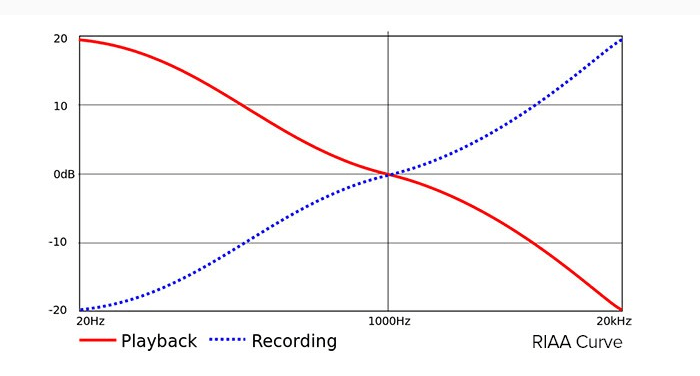
Of course it is eminently possible to make an amplifier that has a distinctive sound (see the Carver challenge) and certainly a lot of valve and even some early solid state integrated amplifiers (such as my old low powered Rotel RA211) did have pretty poor noise and distortion levels. However this technology is now really mature and making a flat frequency response , low distortion, low noise amplifier should be trivial.
“What about speakers?” I hear you say. Well, in the league table of audible differences between devices then speakers are right at the top with a +200 goal difference. Speakers (and headphones) are far and away the largest potential source of deviations from transparent for any class of audio device (excluding vinyl related devices).
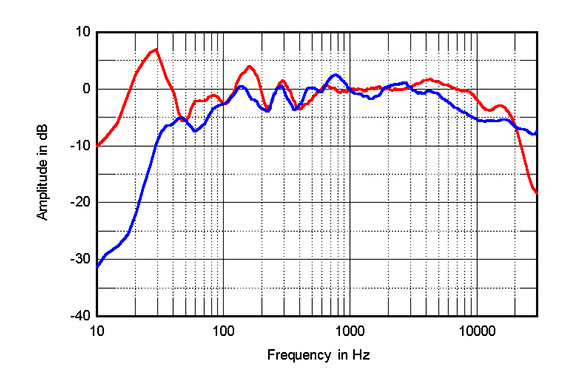
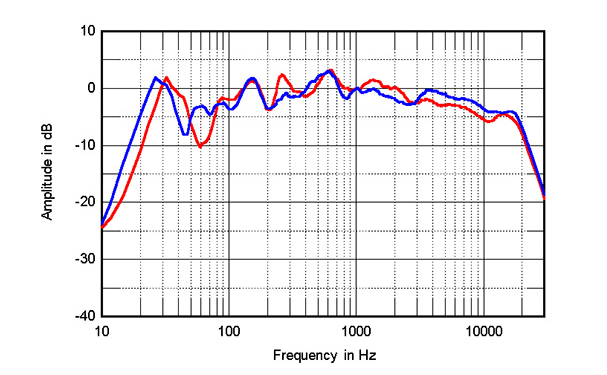
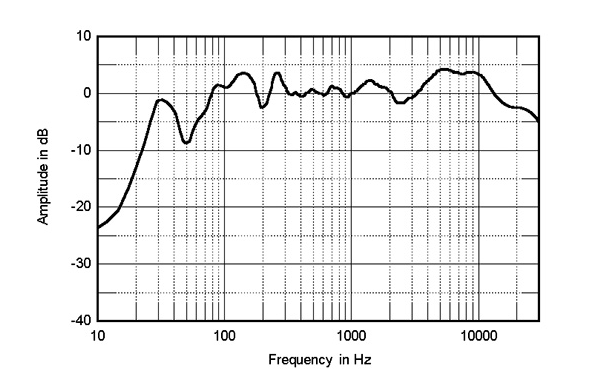
The above are the Frequency Response curves for three different loudspeaker pairs ranging from $7K to $14K chosen at random. These are actually pretty good in the scheme of things but would be considered awful for Amps and digital sources.
Should speakers and headphones have a flat frequency response ?
Given the curves above we might assume that easily audible differences between different speakers (and headphones) are a given. Speakers and headphones are at the end of the audio chain. Can we apply an objectivist lens here? Can we say that the “best” speakers will have the flattest FR and the lowest distortion?
We do have a little evidence that speaker preference may be positively correlated with objective measures of speaker quality. In “Loudspeaker Measurements and Their Relationship to Listener Preferences: Part 2” Floyd Toole describes an experiment where trained listeners were asked to rate different speakers presented randomly. Overall the speakers with the objectively better measurements were more highly rated. Overall these better speakers tended to have flatter frequency responses. Audio manufacturer Harman (https://www.youtube.com/watch?v=xEZkz4Li-0M) are one of the few companies that use blind testing when developing their speakers.
Things to not worry about: Jitter
The other side of this is that it is fatuous (and often very expensive) to be concerned with sources of distortion that are fundamentally inaudible. The current Audiophile monster under the bed is Jitter. Jitter is a distortion created by timing variations in digital samples. A DAC outputs a stream of samples controlled by a very accurate “clock” (much like the “clock” in a computer processor) . In theory the samples should be output at a precise rate so if the signal was sampled at 44.1Khz the samples will be output at exactly 44,100 samples per second.
If the clock controlled DAC consistently outputs samples slightly less often or sightly more often we will simply not notice it.
If however the intervals between the samples vary then this modulates the output leading to distortion.
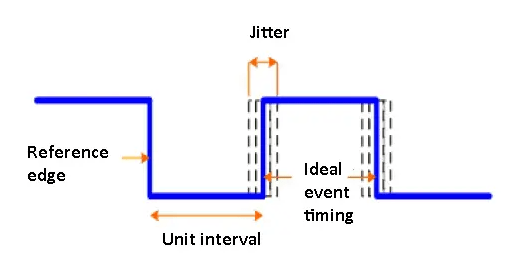
This much is not controversial. The question becomes what magnitude of Jitter (measured in nanoseconds or picoseconds) is audible. This is part of a general issue viz just how good is human hearing.
We can address this question from either a theoretical or practical standpoint. There have been multiple attempts to derive models of audibility.
Julian Dunn created a model where the audibility of Jitter was expressed as the amount which led to the effective bit depth falling beneath the nominal level, this varies with the frequency of the audio signal where jitter has a greater effect at the extreme of human hearing (20Khz). For Dunn 10ps of Jitter would degrade the signal below a nominal 16 bit level (the bit depth used by CD audio).
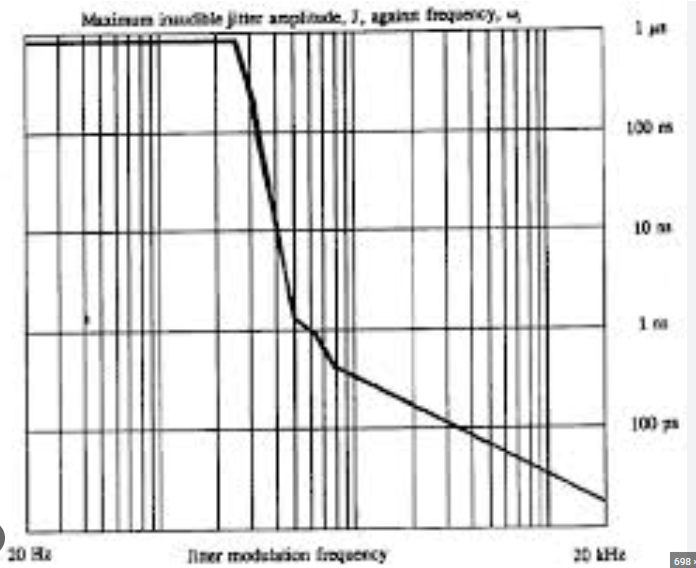
This model however was never verified in empirical listening tests. Also analysis of Dunn’s model show that even this pessimistic thesis depends on the signal level being at over 120db above the threshold of hearing, i.e. close to or above the threshold of pain.
But, is Jitter actually audible as distortion. Well yes of course it is at a sufficient magnitude. However to date no credible well proctored empirical double blind tests have indicated that the level of jitter present in competently engineered consumer digital audio equipment is remotely audible.
Of course even if something is not a problem there will always be some who will cash in on such audiophile worries to supply solutions such as high frequency external reclocking devices even devices to reclock USB data.
Things to really not worry about: Line level (RCA) interconnect cables
Many years ago I was quite active on a audio forum headfi.org. This forum was concerned with discussion of headphone related audio issues. One of the subforums dealt with “Audio Science”. At the time the prevailing consensus in the other subforums was that there were clearly audible differences between different interconnect cables such as the cables used to connect a digital to audio converter (DAC) or a CD player to an amplifier. This attitude is seen in many audio publications. If you could not hear these differences either you had poor hearing or your system was not good enough.
The problem with such assertions is that they were seldom evaluated with any rigor. Typically a listener would listen to different cables with a full knowledge of which cables they were, how they were constructed, their physical appearance and of course what they cost. If you have the readies you can spend $16,000 for a one meter interconnect cable https://www.transparentcable.com/products/opus-rca-interconnect
By and large the more expensive the cable was the better it was reviewed. You would see terms such as detailed, timing, spatial precision, extension, three-dimensional, tightly focused images, resolution, tonal neutrality, coherence and claims of improvements in the dynamic range or attack time. All of this is evaluated by simple uncontrolled listening often comparing B with A sometimes when A has not been used in several hours or even days.
But if there are audible differences between interconnect cables where do they come from? Well, there are really only 4 properties that we need to be concerned with (Resistance, Capacitance, Inductance, and Shielding). Poor shielding can allow noise breakthrough (easily measured, as are the other properties) and a really really pathologically thin conductor can act as a filter.
Of course if you want to make a cable that alters (specifically makes it worse) the transmitted signal it is easy to do so. Several cable makers have included mysterious black boxes in their cables. Some CD player manufacturers (in the past) even tuned their players to have a significant roll off. But, if you want to alter the sound of your system why not just buy an equalizer.
In my days as Nick Charles on the headfi.org forum I once did a set of fairly crude measurements of the differences between RCA cables. I took the output from a CD player passed it through an ADC and recorded it as a wav file which could then be analyzed and the data exported to spreadsheet. if cables made a difference the measured spectra should show a notable difference either visually or from a statistical analysis.
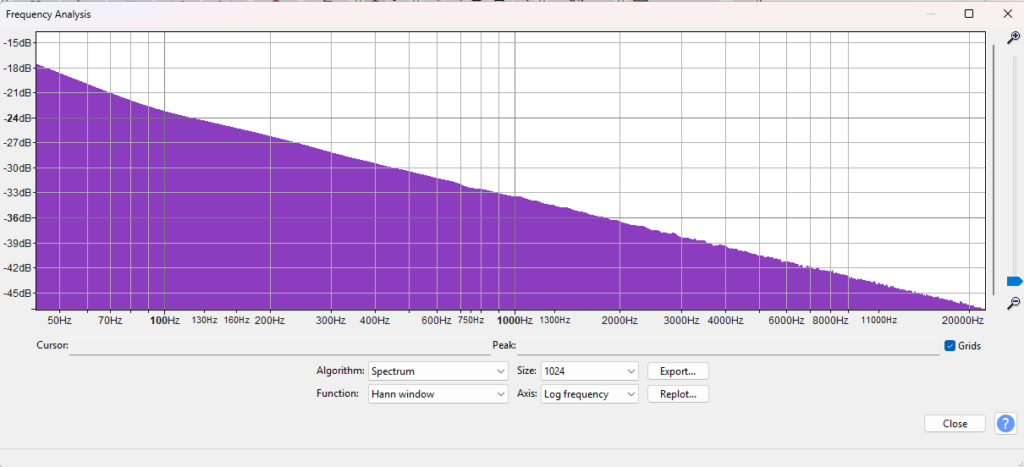
Apart from the $0.77 cable with poor shielding (some extra low level noise) there were really no differences in frequency response between conventional cables at widely varying price points. None of the cables altered the frequency response of the signal to any notable degree, they all had basically flat responses. If a cable has a FR that is substantially not flat that will be easily measurable and possibly audible.
Admittedly these tests were very crude and with some acknowledged methodological limitations. But, the basic pattern has been backed up by much better audio experts (see the work of Ethan Winer and his null device) , apart from faulty cables there really is no audible difference between any 2 competently produced interconnects cables at line level at any price.
Those who think that cables really (a priori) make a difference of course have several arguments to fall back on. First there is the “we cannot measure all the audible properties”, i.e. measurements of noise, distortion and linearity are insufficient. Something, some generally vaguely defined property (clarity, speed etc.) that I can hear cannot be captured. See the writings of Carl Sagan (Dragon in the garage).
Then there is the “your equipment is not good enough to show the differences”. So these obvious “night and day” , drastic, eye-opening differences between cables disappear unless you have a $20K source and $30K speakers and/or your recording device with noise levels at or below -100db is simply too imprecise to capture the differences. Then your hearing is “not good enough” if you do not hear the differences that they do.
Back in the early days of consumer digital audio Ivor Tiefenbrun (Linn Audio) was a fervent anti digital advocate ( he believed that the presence of a digital clock in a room would degrade audio). He was famously incapable of detecting the presence or absence of a 16 bit A/D/A (Sony PCM-F1) loop added into a vinyl playing system featuring his LP12 turntable.
Then how about a middle ground? Show that there are audible differences between non pathological cables by using double blind tests. For most of the cable difference fraternity this is a no no, double blind tests are unnatural or too stressful and they end back at “I hear a difference when I know what I am listening to and therefore there is a difference”.
Anyone with even a passing acquaintance with human psychology will tell you that there are many things that can easily affect (bias) our perception that are not related to the actual stimulus. Food coloring for one. For cables these include (at least) knowledge of cost, physical appearance, “expert” reviews and marketing information (even when nonsensical).
Vinyl vs Digital ?
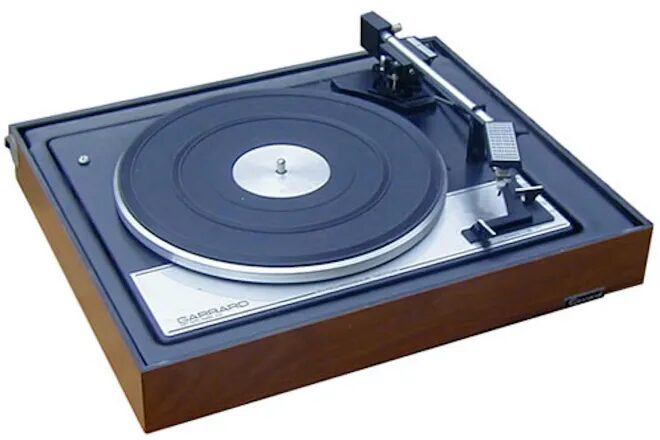
My first memory of listening to a record player was about 1969, it was a very primitive portable player. As my dad improved his Audio system he gave me his older kit which included a Garrard SP25 MK IV turntable (pictured above) and a Rotel 211 amplifier and I bought myself a pair of Solarvox TK19 speakers. Over the years I upgraded the kit ending in early 1984 with a Rega Planar 3 with RB300 tonearm and Nagaoka MP11 cartridge, A&R A60 Amplifier and Kef Coda MKII speakers. Not high end stuff by any means. But something bugged me. The system was very noisy. I was listening to a lot of classical music which tends to have a good dynamic range. With the quieter passages the noise was really annoying. It was not just surface noise(though that was bad enough) , the Rega exhibited very audible levels of rumble.
I should have just taken it straight back to the shop. What else could I do about it? The first option was to try and fix the noise. I experimented with adjusting the TT, changing the bearing and oil. Nothing helped. The next option was upgrading the TT again. . But the Rega was a lot of money to me then and a meaningful upgrade would have been something like the Linn Sondek LP12.
Although CD players had been around in the UK since march 1983 I had not heard one and there were few models on the market. In late 1984 setting myself a budget of £400 I ambled off to Charing Cross Road records (84 Charing Cross Road, London) to audition one or two affordable CD players. I asked to listen to recording of Mahler Symphony no 1 in D (Titan), they brought out the Solti, Chicago Symphony Orchestra Decca recording (sadly lost, but replaced). What I did not hear was jaw dropping.
In the opening movement which starts very quietly I heard no extraneous noise at all, just silence and then slowly the music. It also sounded unbelievably clear. I was hooked. I had a choice of two players both were basically rebadged SONY CDP101 players. I opted for the cheaper Marantz CD63B rather than the Meridian CD101B (with extra bits) which left me £100 to buy 10CDs, the Mahler plus another 9.
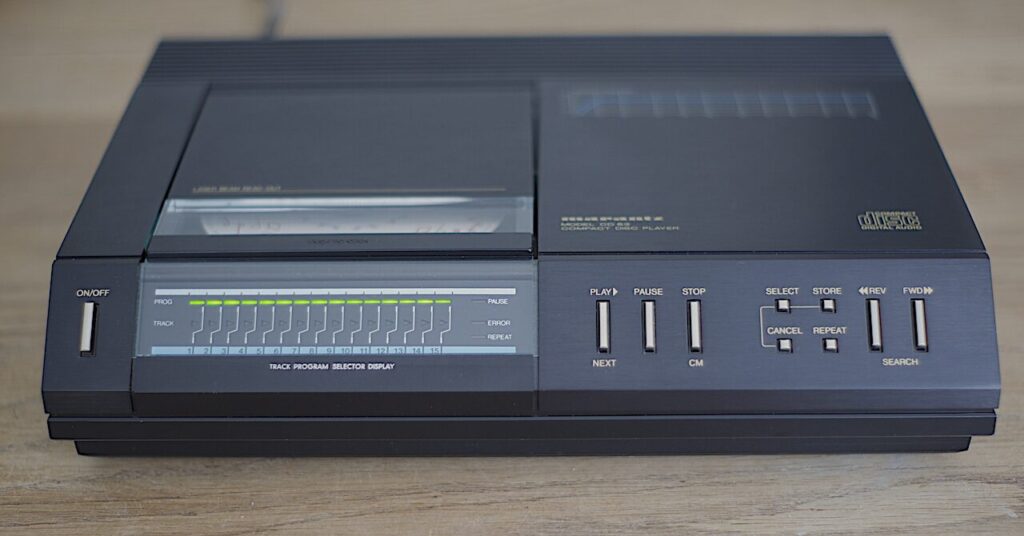
How good was it objectively? Not particularly good. It was a 14 bit player with 4x oversampling. The upshot was it managed a SNR of 90db (equivalent to about 15 bits in new money) , this is pretty dismal by today’s digital high res standards, but compared to a vinyl system that frequently had irritatingly audible extraneous noise it was wonderous.
Since then digital audio has improved massively for most consumer level products. For context my desktop USB powered DAC & Headphone amplifier which can handle high def (up to absurd bit depths and sampling rates) unit cost $99 and has measured SNR of about 117db or over 19 bits of resolution. I can play back a digital silence track on my Topping DX1 at high gain with good headphones on and at full volume and I hear no noise at all. Generally if you want a poor digital audio product these days you have to spend a lot of money. I will not mention any by name…libel laws!
How much progress has been made in vinyl playback? Not very much you might think given the immutable laws of physics and the physical processes involved. You would be half correct. The methods for recording sound onto LP have changed little in the last 70 years but the use of computer control on cutting heads allows finer control over the frequencies and levels that can be cut. The limits remain the same but they can be exploited more effectively, basically squeezing more performance. At the other end what about playback equipment.?
Over the last 70 years there have been many attempts to overcome the limits of vinyl playback. To deal with tracking issues there have been linear tracking turntables. To deal with the physical contact problems (wear and noise) there have been Turntables that read LPs using lasers. Neither of these has persisted much outside niche applications (such as archival) and the model of a traditional turntable remains much the same as it was in 1955.
More expensive turntable systems can boast better speed stability, lower noise breakthrough, massive plinths and platters, better frequency responses, quieter motors and bearings and less resonant tonearms. It is possible to hypothesize a future “perfect” LP playback system that adds no extra noise. However the incipient noise will still be there. In this discussion we see that even a groove with no signal encoded will have significant noise.
The case for Vinyl
There are numerous arguments in favour of vinyl. The most obvious one is that some music listeners just prefer the sound of records. Vinyl can sound very good. At high enough levels to drown out the noise even my poor Rega system sounded very good. Other sources of preference typically cited include the large artwork, the rituals, the concentration required, the tactile nature of the experience, the unavailability of some music on other media, nostalgia and so on. We can love the sound of vinyl while not ignoring the limitations. However some vinyl fans have a need to support their preference with calls to some technical superiorities of vinyl, the reasoning goes “If I prefer it, it must be somehow superior”. Leaving aside human psychology could there be any mileage in the argument for technical superiority of vinyl?
Technical Superiority of vinyl ?
Higher frequencies: If we limit digital to 1984 level 44.1Khz sampling (covering the audible frequencies from 20 to 20Khz) then there is an argument that cartridges can easily reproduce frequencies well above 20Khz, some amplifiers can handle > 20Khz and some speakers can reproduce frequencies above 20khz although not with the same energy supplied generally about 3db down. The highest fundamental note in music is about 8Khz (B octave 8) . Exotic instruments such as the Balinese Gamelan can output harmonics of over 50Khz, however to even reproduce this requires specialist super tweeters. Is this clearly inaudible content perceived in any way? You can google “Oohashi hypersonic” if you like but the conclusion is …very unlikely. Of course in 2026 (or whenever you are reading this) we can trivially record music digitally at 96Khz if we really want to push the available frequencies to 48Khz. However, sampling at 96Khz does have some inherent problems such as ultrasonic noise potentially folding back into the audible range causing distortion.
Next up “Vinyl has infinite resolution, digital is just an approximation“. This is where intuition and physics disagree. The premise is that since vinyl playback is continuously variable and not sampled it must have infinite resolution.
However continuous and infinite are far from the same thing. Let us say that a cartridge has a maximum output of 2000µV (microvolts) and a minimum output of 0µV. There are theoretically an infinite number of voltages between 0µV and 2000µV for instance 1000.1, 1000,01, 1000.001 and so on and a cartridge will be able to output any of those values hence it has infinite resolution. Not so fast! If this were the case then vinyl would have infinitely high SNR and an infinite Dynamic range. We know this is simply not true. Even if the cartridge was capable of such quality the molecular structure of a vinyl LP does not support this level of resolution here is an excellent explanation by Dr. Jim LeSurf (ex St Andrews University Physics lecturer) .
Now “Vinyl is less compressed than digital“. There is perhaps some truth to this. You can have LP and CD versions of a track that have very different dynamics where the LP version may have a much higher dynamic range. There is a lot going on here. In the early days of CD engineers used to recording for analog had to adapt to engineering for digital. Able to exploit a greater dynamic range some chose to create hot recordings with most of the sound at very high levels not typically playable on vinyl due to the physical limits. This bleeds into the so called “Loudness wars” where engineers produce heavily saturated recordings especially for popular music. Luckily classical music engineers by and large knew how to exploit the dynamic range properly. This argument however takes a limit in the format and turns it into virtue, whereas in fact the issue is of not using the digital technology optimally. The usable dynamic range of digital remains greater than that of vinyl.
“Digital is sampled so throws a lot of information away while analog captures it all.” If analog captured it all it would have the infinite properties mentioned above. This argument is based on (often willful) misunderstanding of digital audio in general and sampling in particular (see also digital sampling creates stair steps). Monty from xiph.org can explain this better than me.
In short for a bandwidth limited signal if the sampling rate is 2x the highest frequency component then any arbitrarily complex waveform can be sampled and reconstructed perfectly. The CD standard 44.1Khz sampling rate easily captures frequencies up to 20Khz which is where hearing (for all but very young people ) stops. This is derived from the work of Harry Nyquist and Claude Shannon and is a foundation of digital communication.
The above myth can almost be forgiven if we replace digital with MP3 (or other lossy encoders). Lossy compression is based on now well tested psychoacoustic models and it does discard some information. But this is not random or capricious. The lossy compression algorithms discard data that we will not normally hear. A common approach here is to invoke the concept of masking. If a music sample contains two frequencies that are quite proximal then the louder signal may render the quieter signal inaudible.
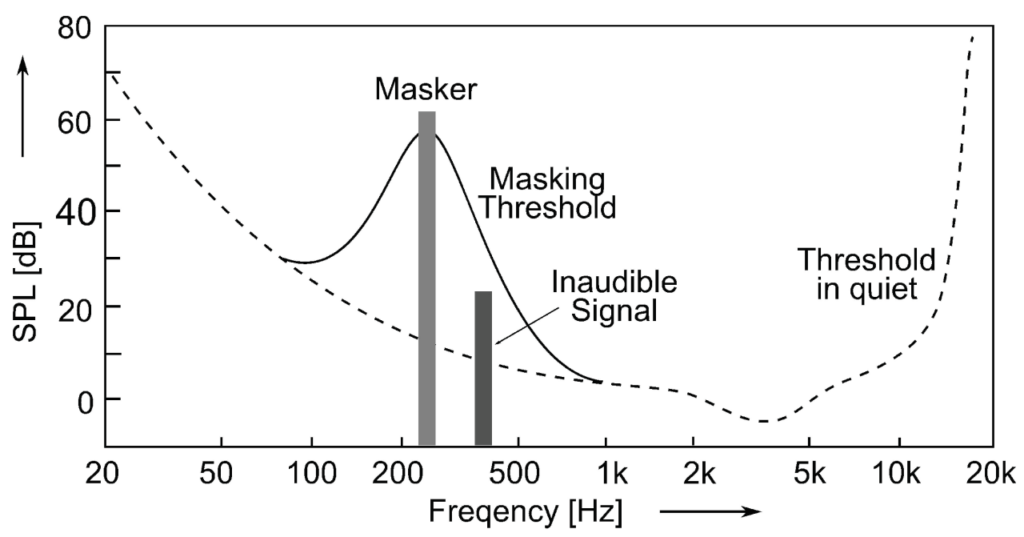
We can thus throw away the masked signal thus reducing the data requirements. There are other techniques used in lossy sampling for instance they may involve discarding some high frequency components i.e. those above 16Khz. Depending on how aggressive the algorithms are we might end up with a file that is 1/10th to 1/5th of the size of the original. Typically we express the data requirement of MP3 in Kbits per second. Since storage is so cheap these days it is hardly worth it .
But is high bitrate MP3 perceptually transparent? That very much depends on the listener. There are plenty of online tests available you can try yourself. On the whole relatively few listeners can reliably detect the difference between high bitrate MP3 (320kbs or VBR 0) and uncompressed audio. The only time I was able to reliably discern the difference between uncompressed and lossy compressed audio was a Dr. Feelgood track where the conversion to MP3 had pushed the peak values above 0db for some samples resulting in audible clipping. Dropping the source level by 3db and re-encoding made this clipping go away and I was no longer able to detect a difference.
This LP sounds better than the CD/Digital file of the same music
The LP and the CD version of a track may have very different mastering. The LP version may have better dynamics compared to a poorly mastered CD of the same music (see Loudness wars). Sadly you can find many examples of modern digital remasters with far worse dynamic ranges than the original LP releases or even early CD releases. This problem is of course an implementation issue and does not indicate any fundamental technical superiority of the analog chain. Thankfully classical digital audio tends to be better mastered.
While rare it is not impossible to get really bad CD players and music servers that have audible problems. A good LP system would sound preferable to a very poor digital system.